
One Campus. Every Chapter.
How to Find a Private School That Offers Both Preschool and High School - and Why Rancho Christian’s Connected Preschool–12 Experience Matters
If you want one private school for your child’s entire educational journey, search for a preschool-through-12th-grade, P–12, or preschool-through-high-school school—and then confirm that every division is part of the same school community.
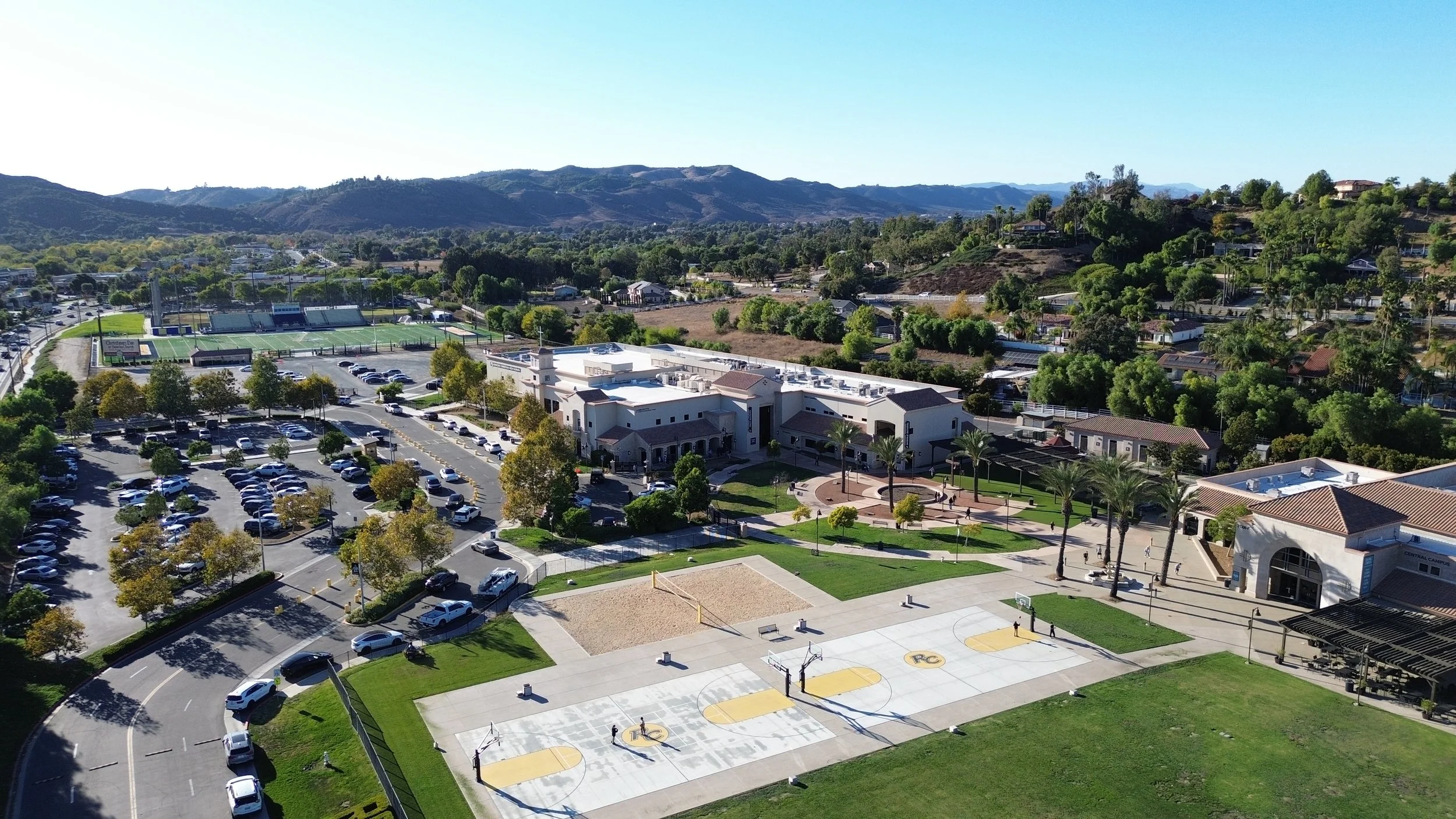
In Temecula, California, Rancho Christian School serves children beginning at age two in preschool and continuing through high school on one beautiful 34-acre campus.
That complete educational path gives families something valuable: the option to move from preschool, Pre-K, and TK into elementary, middle, and high school without having to start over in an unfamiliar school community at every stage.
What Should I Look for in a Preschool-Through-High-School Private School?
A long grade span is helpful only when the school is strong at every level. As you compare schools, ask these seven questions:
Does the school truly serve preschool through grade 12? Some school systems advertise a broad grade range but divide students among unrelated locations or offer only selected grades.
Can my child remain within one educational community? Ask whether the divisions share a mission, leadership, campus traditions, student services, and a coordinated approach to transitions.
Is each age group given appropriate spaces and instruction? Preschool children need learning and outdoor areas designed for young children. Older students need specialized teachers, laboratories, arts spaces, athletics, and college and career guidance.
How does the school protect students? Ask about controlled access, visitor check-in, pickup procedures, emergency preparation, supervision, staff screening, and communication with families.
How are children prepared for the next division? A good P–12 school should be able to explain the transition from preschool to kindergarten, elementary to middle school, and middle to high school.
Do students have meaningful cross-age experiences? Programs such as reading buddies, mentoring, performances, chapel, service, and school traditions can help younger students feel known while giving older students authentic opportunities to lead.
Would we choose every division on its own merits? Look beyond convenience. Tour the preschool, elementary, middle, and high school programs and evaluate the quality and fit of each one.
Why Can Educational Continuity Matter?
Children grow through relationships, routines, and a sense of belonging. Remaining in one school community can preserve familiar relationships and reduce the number of major institutional changes a student must navigate. It can also help teachers and school leaders understand a child’s history, strengths, needs, and growth over time.
Research gives families a reason to examine school transitions carefully. A peer-reviewed study using statewide Florida data found that students who moved into a separate middle school experienced an immediate decline in achievement. The study also found increased absences and an association with a higher dropout rate later on.
A separate New York City study found persistent achievement declines following entry into middle school.
These studies examined public-school grade configurations, so they do not prove that every preschool-through-12th-grade campus produces better results. They do show why fewer disruptions and thoughtfully planned transitions are worth considering.
Continuity must also be intentional. The U.S. Department of Education’s Regional Educational Laboratory highlights coordination, cooperation, and collaboration—including information sharing, relationship building, and individual support—as important elements in the transition from preschool or TK to kindergarten.
Just as important, the Centers for Disease Control and Prevention describes school connectedness—the belief that adults and peers care about a student and their learning—as a protective factor associated with stronger attendance, grades, test scores, and likelihood of graduation.
A shared campus does not create belonging by itself. Consistent relationships and a genuinely caring culture, however, can help a school cultivate it.
What Are the Benefits of Cross-Age Learning?
On a comprehensive campus, younger and older students can learn from one another in structured and supervised ways.
Rancho Christian’s cross-age Reading Buddies are one example. These experiences allow younger students to practice literacy skills while building positive relationships with older role models.
Broader educational research has found positive average effects from peer tutoring in literacy and other subjects, although results depend on thoughtful pairing, training, and implementation. Reading buddies can also give older students a practical way to develop patience, communication, responsibility, and servant leadership.
Cross-age connections may continue through school performances, chapel, service projects, athletics, mentoring, and community traditions. These experiences can help younger children picture their future while encouraging older students to recognize their responsibility as leaders.
Why Are Outdoor Spaces Important for Preschool Children?
Outdoor areas matter, especially during the early years.
A systematic review of research involving children ages two through twelve found encouraging evidence that nature play can support physical activity and imaginative or cognitive play. The researchers also noted limitations in the quality and consistency of the available evidence.
The practical takeaway for parents is simple: look for safe, age-appropriate outdoor areas that children use regularly—not merely attractive grounds seen during a tour.
Rancho Christian Preschool provides indoor and outdoor areas specifically designed for young learners. Its daily rhythm combines structured early literacy, math, science, music, art, movement, and faith-based learning with creative play, exploration, rest, and outdoor activity.
A Preschool-Through-High-School Option in Temecula
Rancho Christian is one of the Inland Empire’s few comprehensive private Christian schools serving children from preschool through high school.
Since 1981, Rancho Christian has partnered with families in the Temecula Valley to equip Christ-centered leaders who are University Ready and Life Ready.
The school community includes more than 1,000 students on a beautiful 34-acre campus with more than 200,000 square feet of dedicated learning space. Each age group has spaces and programs designed for its developmental and educational needs.
Preschool children begin their journey in a nurturing environment that balances purposeful learning with joyful childhood. As students grow, the same campus opens the door to specialized teachers, advanced learning opportunities, and an expanding range of academic, artistic, athletic, and leadership experiences.
Rancho Christian’s campus includes:
Indoor and outdoor preschool learning areas
Four science labs
A STEM workshop
A Conservatory of the Arts
Athletic fields and facilities
An indoor gymnasium
Training facilities
A Central Auditorium for large community performances
A dedicated theater for student productions
Outdoor areas where students can learn, play, and build friendships
Cross-age experiences such as Reading Buddies help connect younger students with older role models. Coordinated performing arts programs also create a unified experience across grade levels, allowing students to grow in music, theater, visual arts, and performance throughout their years at Rancho Christian.
One Campus Can Support the Whole Family
For parents, one campus can also simplify family life.
Siblings at very different ages can belong to the same school community. Families can build lasting relationships with teachers, administrators, coaches, and other parents. Students can approach the next stage of school in a place that already feels familiar.
A comprehensive campus may also give children access to resources that are not always available in a stand-alone preschool. Young students can participate in large performances, community celebrations, cross-age literacy activities, chapel, and other carefully supervised experiences within the broader school community.
At the same time, each division retains the age-appropriate environment children need. Preschoolers are not treated like high school students, and high school students receive the specialized academic preparation, counseling, athletics, arts, and leadership opportunities appropriate for their stage of development.
How Do I Know Whether Rancho Christian Is the Right Fit?
The best way to evaluate any preschool-through-high-school private school is to see it in action.
When you visit, ask to view the age-specific classrooms and outdoor areas. Learn how safety and visitor procedures work. Talk with teachers and school leaders. Ask how students are supported as they transition from one division to the next.
If you are considering a long-term educational home, explore both the program your child needs now and the opportunities that will be available in later years.
Rancho Christian School is located at 31300 Rancho Community Way, Temecula, CA 92592, serving families from Temecula, Murrieta, French Valley, Winchester, Menifee, Lake Elsinore, and surrounding Inland Empire communities.
Book a campus tour, learn more about Rancho Christian Preschool, or contact Admissions to explore the journey from preschool through high school.
Frequently Asked Questions
Is Rancho Christian a preschool-through-12th-grade school?
Yes. Rancho Christian offers preschool beginning at age two, full-day Pre-K and TK, elementary school, middle school, and high school within one school community in Temecula, California.
Are Rancho Christian Preschool and Rancho Christian High School on the same campus?
Yes. Rancho Christian’s preschool and TK–12 programs are located at 31300 Rancho Community Way on the school’s 34-acre Temecula campus, with spaces designed for the needs of each age group.
Is staying at one school from preschool through high school better for a child?
It can provide valuable continuity, familiar relationships, fewer institutional changes, and a shared community. However, the grade span alone does not guarantee better outcomes. Families should evaluate teaching quality, student support, safety, culture, programs, and age-appropriate spaces at every division.
What should I ask during a private-school tour?
Ask about teacher qualifications, class sizes, curriculum, accreditation, preschool licensing, safety and visitor procedures, outdoor time, student support, transitions between divisions, arts and athletics, high-school courses, college counseling, tuition, and financial assistance.
Does Rancho Christian offer opportunities for younger and older students to interact?
Yes. Cross-age activities such as Reading Buddies, school performances, chapel, service, and community events give students age-appropriate ways to connect. These experiences also give older students opportunities to practice leadership, responsibility, and care for others.
How can I visit Rancho Christian School?
Families can schedule a campus tour through the Rancho Christian Admissions team. During your visit, you can explore classrooms, learning spaces, outdoor areas, arts and athletic facilities, and the programs available from preschool through high school.
Your child’s educational journey can begin at age two and continue through high-school graduation—all within Rancho Christian’s Community of Christlike Care.