
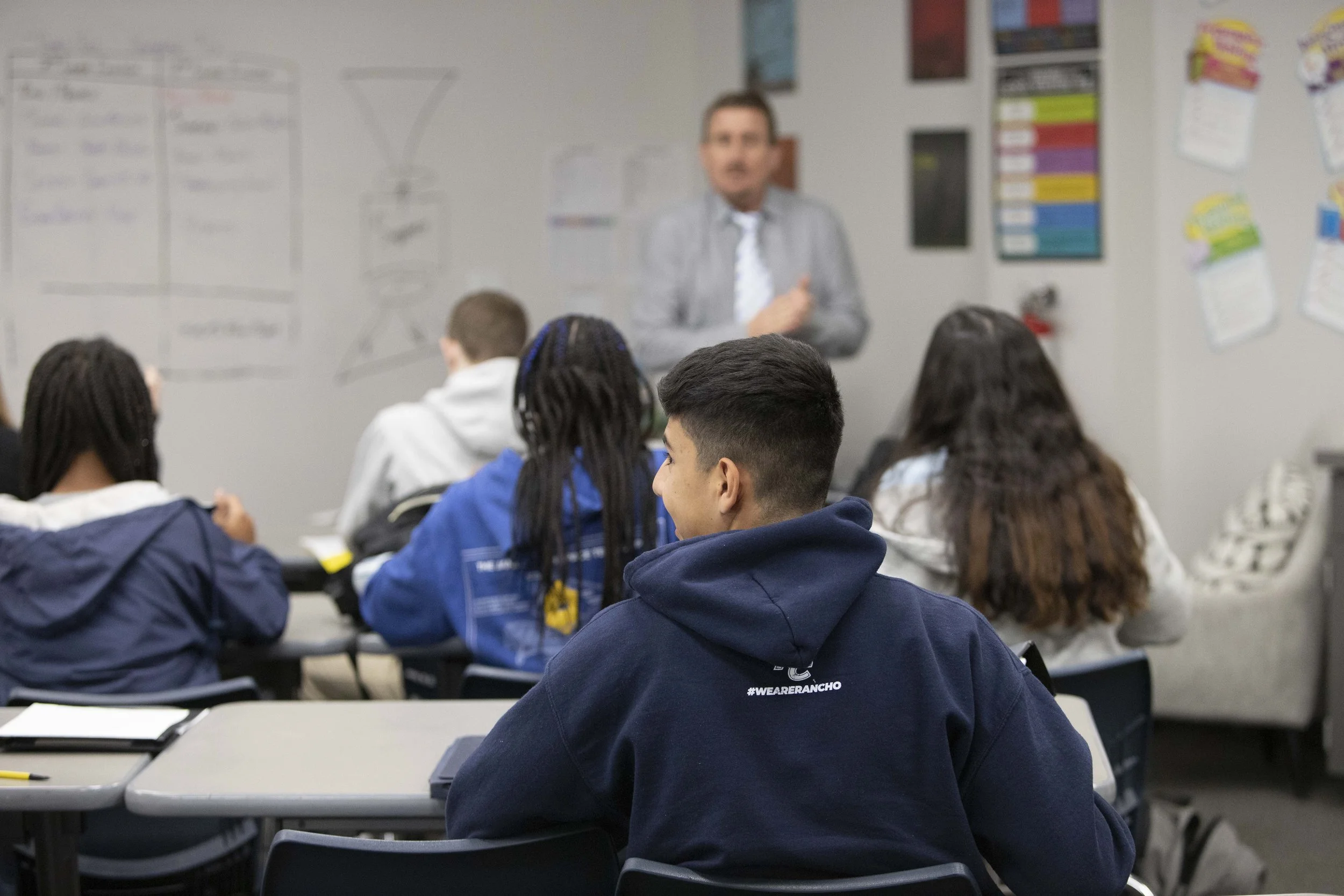
Middle school is a season when students need more room to make decisions, practice responsibility, and discover what they can do. They also still need parents who stay close enough to notice when support is needed.
The goal is not to manage every assignment, friendship, or setback for your child. It is to help them build the habits, judgment, and confidence to handle more of life with growing maturity.
At Rancho Christian Middle School, students are challenged to think critically, take ownership of their learning, and develop the study habits that prepare them for high school. They are also known, supported, and encouraged as they grow academically, socially, and spiritually. That combination of challenge and care is at the heart of Growing Up Great.
Shift from managing to coaching
As children move through middle school, parents can gradually move from doing tasks for them to helping them think through tasks.
Rather than checking every assignment yourself, ask questions that prompt planning:
What is due this week?
Which class will take the most time?
What is your plan for getting started?
What might get in the way?
When do you want to ask a teacher for help?
This does not mean stepping away when a student is struggling. It means offering structure without taking over. A weekly check-in about upcoming work, activities, and deadlines can give your child a consistent place to practice planning while showing that you are available.
Create systems your child can own
Middle school brings more classes, teachers, due dates, and activities. Organization is not simply a personality trait. It is a skill that grows through practice.
Help your child choose a simple system they can maintain: one calendar, a planner, or an organized digital tool. The system matters less than the routine of reviewing it. A short Sunday-evening or Monday-morning check can help them see the week ahead, break larger assignments into smaller steps, and make realistic choices about their time.
If papers, backpacks, or digital files become overwhelming, work with your child to reset without shame. Ask them to identify what is important, what can be recycled, and how they want to keep track of materials next time. Progress is more valuable than a perfectly clean backpack for one day.
Make room for productive struggle
Students need to learn that difficulty is not evidence that they cannot succeed. A challenging reading assignment, math problem, project, or group dynamic can become an opportunity to practice perseverance.
When your child is frustrated, start with curiosity: “What part is hardest right now?” Help them name one next step, such as rereading directions, reviewing class notes, beginning with an easier problem, or writing a question for the teacher.
At Rancho Christian, A Higher Standard is not about perfection. It is about approaching work with purpose, courage, discipline, humility, and faith. Families can reinforce that message by celebrating effort, growth, and wise choices alongside achievement.
Keep conversations open
Middle school students may not always volunteer details about school, friendships, or worries. Open-ended questions can make conversation feel less like an interrogation:
What was one good part of your day?
What felt challenging?
Who did you spend time with today?
What is something you are looking forward to?
Is there anything you want help thinking through?
Some of the most meaningful conversations happen while driving, preparing dinner, or taking a walk, rather than during a formal sit-down. The aim is to create a relationship where your child knows they can bring both successes and struggles to you.
Partner with teachers before a concern grows
Parents do not need to wait for a major problem to communicate with teachers. A specific, respectful message can help everyone understand what a student needs. Share an observation, ask what the teacher is seeing, and look for one or two practical ways to support the same goal at home.
That partnership matters because middle school students are learning how their choices affect both their learning and their community. Teachers provide structure and encouragement in the classroom. Parents provide consistency, perspective, and care at home. Together, they can help a student take the next responsible step.
Remember that independence includes character
Growing independence is about more than finishing homework without reminders. It includes learning to communicate honestly, recover from mistakes, manage emotions, care for friends, and make choices that reflect a student’s values.
At Rancho Christian, faith is part of that formation. Students are encouraged to ask meaningful questions, discover their identity in Christ, and grow in confidence, kindness, resilience, and integrity. They are preparing not only for the academic demands of high school, but also for the relationships and responsibilities ahead. Enroll Now — Rancho Christian School
Growing Up Great
Middle school should not be rushed through or treated only as a bridge to high school. It is a meaningful season of learning, belonging, and becoming.
When families provide clear expectations, patient encouragement, and room to practice responsibility, students can grow into more independent learners without feeling alone. That is what Growing Up Great can look like: students taking ownership, parents staying connected, and a school community walking alongside them with purpose and care.
To see how Rancho Christian Middle School supports students through these important years, schedule a tour.