
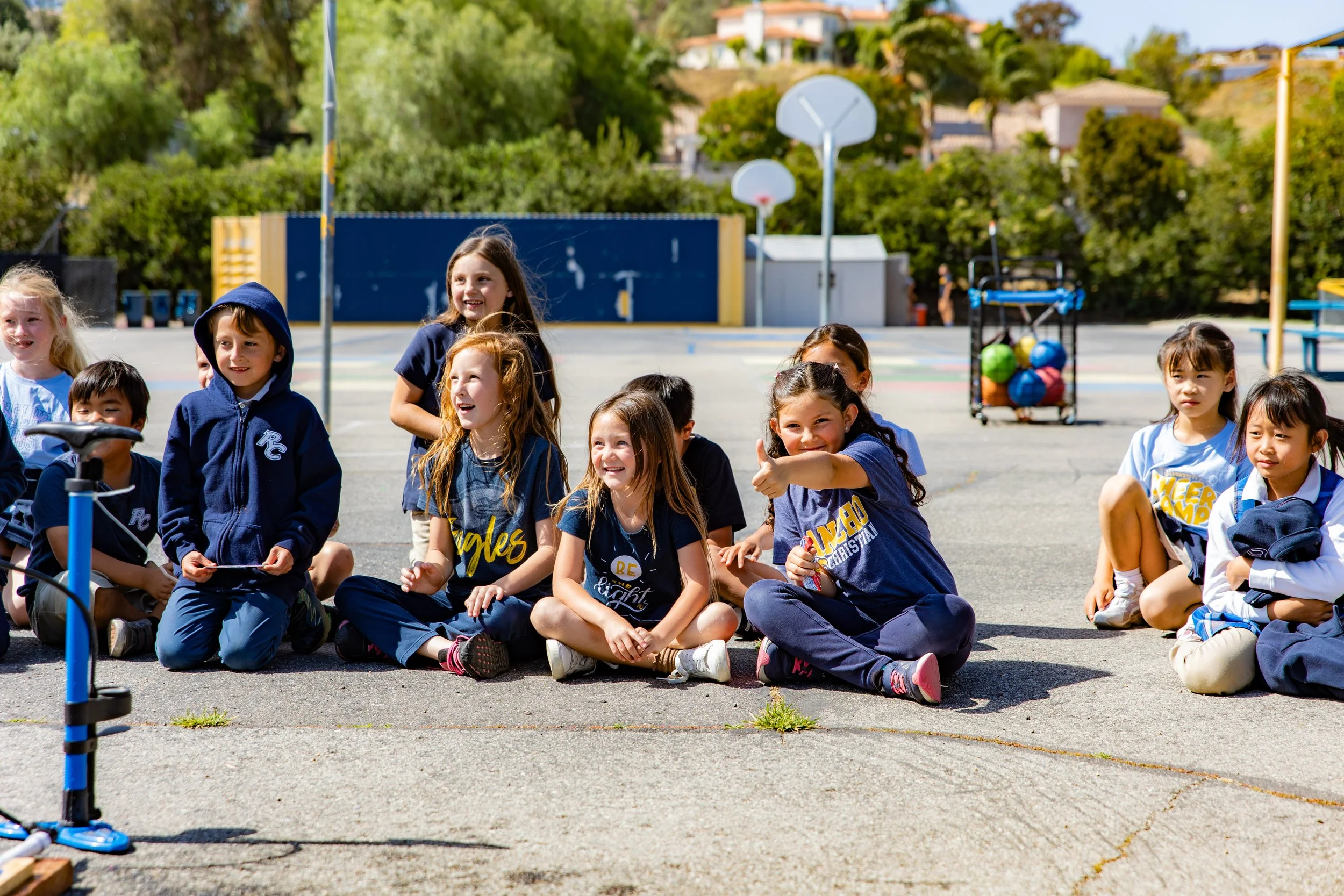
Elementary school is where children begin turning daily schoolwork into lasting habits. Parents can help most by creating a steady rhythm at home, staying curious about what their child is learning, and partnering with teachers before a challenge becomes discouraging.
At Rancho Christian Elementary, students build foundations in reading, writing, math, science, and critical thinking within a Christ-centered community. The goal is not perfection or pressure. It is helping each child grow into a learner who is willing to ask questions, practice, and keep going when work becomes difficult. Rancho Christian School
Start with a predictable learning rhythm
A calm, repeatable after-school routine gives children a place to begin. It does not need to look the same in every home. For some families, that means a snack, a short movement break, and then schoolwork. For others, it may mean homework after dinner.
The important part is clarity. Help your child know when school materials come out, where they will work, and what “finished” means. A designated spot with basic supplies can reduce small frustrations that derail focus.
Try to keep the first check-in simple: “What do you need to do today?” Invite your child to identify the assignment, estimate how long it may take, and choose a first step. Those small decisions build ownership over time.
Ask questions that reveal thinking
When a child brings home an assignment, it is tempting to focus only on whether it is correct. Better questions help them explain their process:
What was the most interesting thing you learned today?
Which part felt easy? Which part felt challenging?
How did you solve that problem?
What might you try differently next time?
Is there a question you want to ask your teacher?
These conversations strengthen communication and critical thinking without turning home into another classroom. They also give parents useful insight into whether a child is stuck on a particular skill, adjusting to a new routine, or simply tired after a full day.
Make reading part of family life
Reading fluency grows through regular practice and meaningful conversation. Let your child see you read, whether it is a book, an article, a recipe, or something connected to work. Set aside time to read together or separately, then ask one another about an interesting detail, a new word, or a character’s choice.
If your child is reading independently, you do not need to quiz them after every chapter. A genuine “Tell me about your book” can be more effective. If reading feels hard, encourage effort and contact the teacher for guidance on how to support the skills being taught in class.
Treat mistakes as part of learning
Strong learners are not children who never struggle. They are children who learn how to respond when something does not come easily.
When your child makes an error, resist the urge to immediately supply the answer. Pause and ask, “What do you notice?” or “What is another strategy you could try?” In math, that may mean drawing a picture, using a number line, or explaining the problem out loud. In writing, it may mean rereading one sentence at a time. In a project, it may mean revising a plan.
Teachers at Rancho Christian work to know, support, and challenge students personally. Families can reinforce that same message at home: effort matters, help is available, and a difficult moment is not a final verdict on what a child can do.
Keep learning connected to the real world
Elementary students learn deeply when they can see why knowledge matters. Invite them to use math while cooking or comparing prices, notice patterns in nature, explain a science question they are wondering about, or write a note to encourage someone.
These moments do not need to be elaborate. They show children that reading, writing, math, observation, and communication are tools for everyday life. They also make room for curiosity, one of the habits that helps learning continue long after an assignment is complete.
Partner early and specifically with teachers
Parents and teachers see different parts of a child’s day. Sharing those perspectives is one of the most practical ways to help a student. If you notice recurring frustration, avoidance, or a change in confidence, reach out with a specific observation and a simple question: “We have noticed that reading time has become stressful at home. What are you seeing in class, and how can we support the approach you are using?”
Likewise, share what is going well. A child who hears that home and school both recognize their growth learns that effort is noticed.
At Rancho Christian, parent partnership is part of a learning environment where students are known, encouraged, supported, and challenged. Faith shapes that work, too. Children are invited to understand that their abilities are gifts to develop with humility, perseverance, and care for others. Rancho Christian School
A foundation for what comes next
The habits children develop in elementary school will serve them as they move into more complex learning. Reading with attention, explaining their thinking, managing a task, asking for help, and trying again are not only school skills. They are life skills.
That is one way Rancho Christian pursues A Higher Standard: not by asking children to be perfect, but by surrounding them with meaningful challenge, personal care, and opportunities to grow.
To see how Rancho Christian Elementary combines strong academic foundations with Christ-centered character and a community where children are known, encouraged, and supported, explore Elementary.